




In the automotive industry, being late costs money. And often the problem isn't in production, but much earlier: in the validation of parts.
A geometry that doesn't fit well, a part that needs several iterations, or an assembly that fails tests can delay an entire project by weeks. And when we talk about automotive, those delays end up affecting suppliers, homologations, production lines and launches.
For this reason, more and more companies in the sector are using industrial 3D printing to accelerate validations and reduce development times.
We're not just talking about rapid prototyping. We're talking about manufacturing actual functional parts to validate earlier, catch errors earlier, and make decisions much faster.
And that's where additive manufacturing is completely changing the way many engineering departments work.
The real problem: validating parts remains slow
Many companies continue to validate components using processes designed for production, not development.
The problem is that during the validation phase, everything is constantly changing:
- dimensions
- geometries
- materials
- tolerances
- assemblies
- or even the complete design of the part.
And every small change requires processes to be repeated.
When you rely on machining or temporary tooling, this can become a huge bottleneck within product development: waiting times, external suppliers, cost overruns, delays and difficulty in iterating quickly.
In automotive, where timescales are becoming increasingly aggressive, this is no longer sustainable for many projects.
This is why companies are integrating 3D printing directly into their validation processes.
The pieces typically validated with 3D printing are prototypes, functional prototypes, tooling, jigs and fixtures, and end-use parts.
One of the advantages of additive manufacturing is that it allows for the validation of many types of components before moving to production.
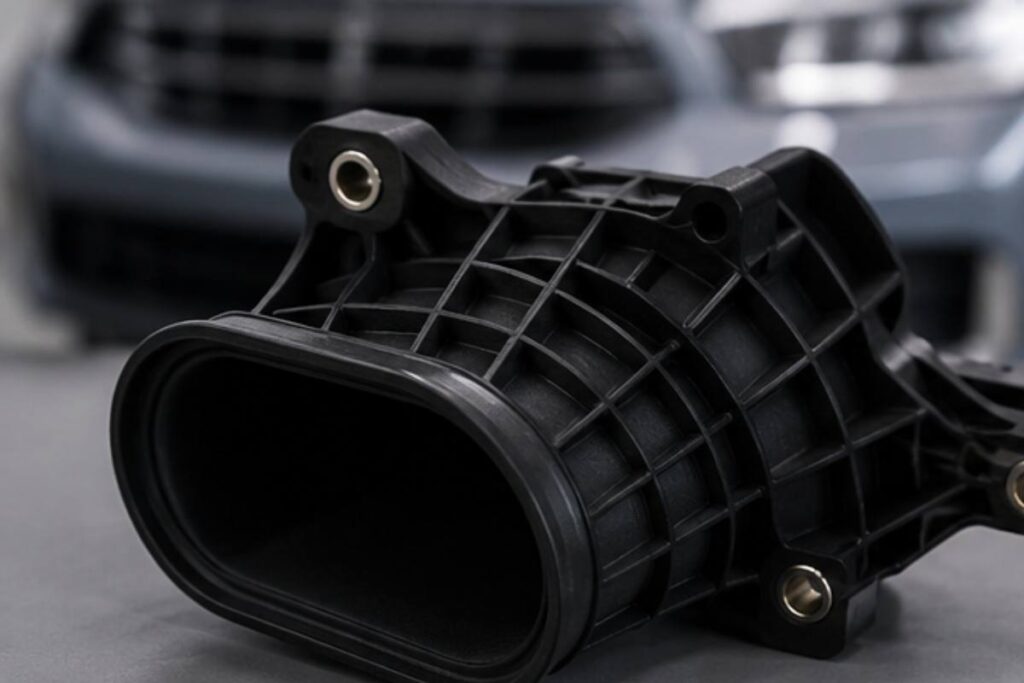
It is currently widely used for:
- supports
- casings
- ducts
- Interior parts
- fastenings
- tooling
- Technical components
- assemblies
- and functional parts
It is also very common to use it in:
- Ergonomic validation
- tolerance check
- assembly tests
- review of complex geometries
Often, there's no need to manufacture a definitive part. The important thing is to quickly validate if the design works before continuing to move forward.
And there, 3D printing allows for a huge saving of time.
What is really changing with 3D printing
The big difference is not solely the manufacturing speed.
What really changes is the way of working.
Previously, modifying a part meant resending the design, waiting for manufacturing, validation, detecting an error, Start again.
Now teams can iterate much faster.
They can test different versions almost in parallel, validate actual assemblies and make technical decisions much earlier.
This drastically reduces downtime within development.
And furthermore, it improves something very important:
The ability to react quickly.
In automotive, that's key.
The ability to iterate quickly not only speeds up validation: it can also reduce costs and improve manufacturing efficiency. Here you can see real examples of how companies are applying this with 3D printing.
Practical example: technical support validation
Imagine a company that is developing a new bracket for an assembly line.
The The CAD design looks correct., but they need to check actual space, accessibility, resistance and mounting within line.

With traditional manufacturing, it could take weeks. between supplier, machining and adjustments.
With 3D printing, you can:
- produce a first version in a few days,
- to try it out in a real-world environment,
- detect errors,
- Change design,
- and re-validate immediately.
In many cases, This reduces full weeks of development.
And furthermore avoid manufacturing final moulds or parts Too soon.
Rapid validation has become a competitive advantage
In automotive, developing a part no longer consists solely of designing and manufacturing it. The real challenge lies in validating quickly, iterating quickly, and making technical decisions without slowing down project development.
There's increasing pressure to accelerate launches, optimise processes, and reduce lead times between design and production. This forces engineering teams to work in a much more agile way than they did a few years ago.
In many projects, moreover, parts are constantly evolving during development. Geometries, materials, assemblies, or technical requirements change practically on the fly. Being able to validate those modifications quickly makes a huge difference in terms of time, costs, and reaction capability.
This is where the industrial 3D printing fits particularly well within the automotive sector. The ability to manufacture functional prototypes in a very short time allows for real solutions to be tested earlier, errors to be detected quickly, and development to progress without relying on long or rigid processes.

More than an alternative to traditional prototyping, additive manufacturing has become a strategic tool for accelerating innovation and gaining flexibility within product development.
Technologies most commonly used to validate parts
Not all 3D printing technologies are suitable for the same purpose. Depending on the type of validation, some are more interesting than others.
MJF (Multi Jet Fusion)
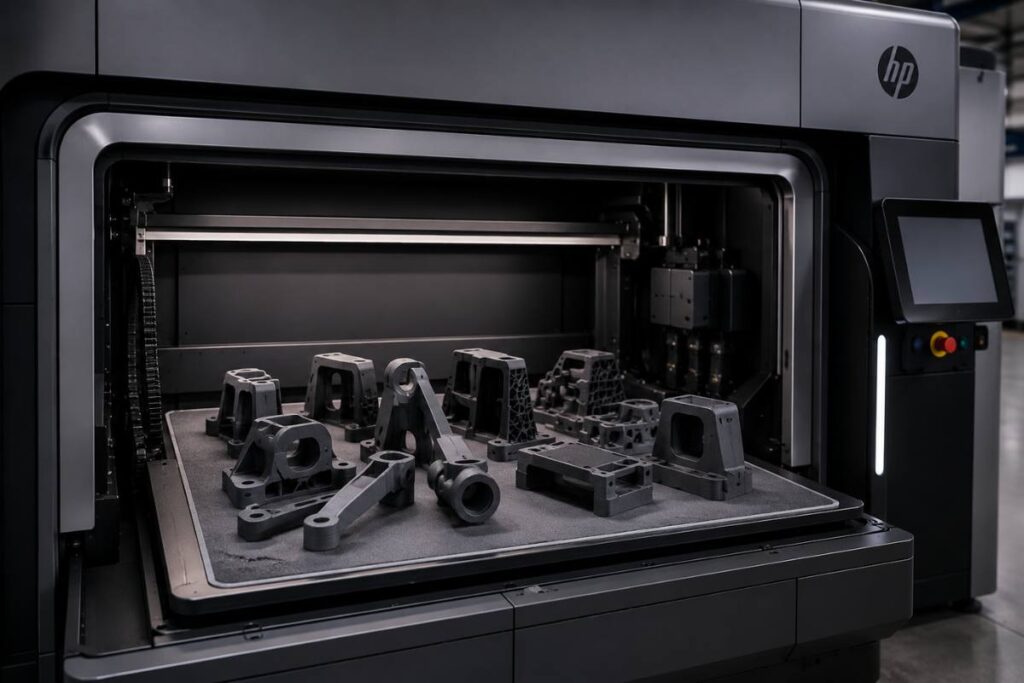
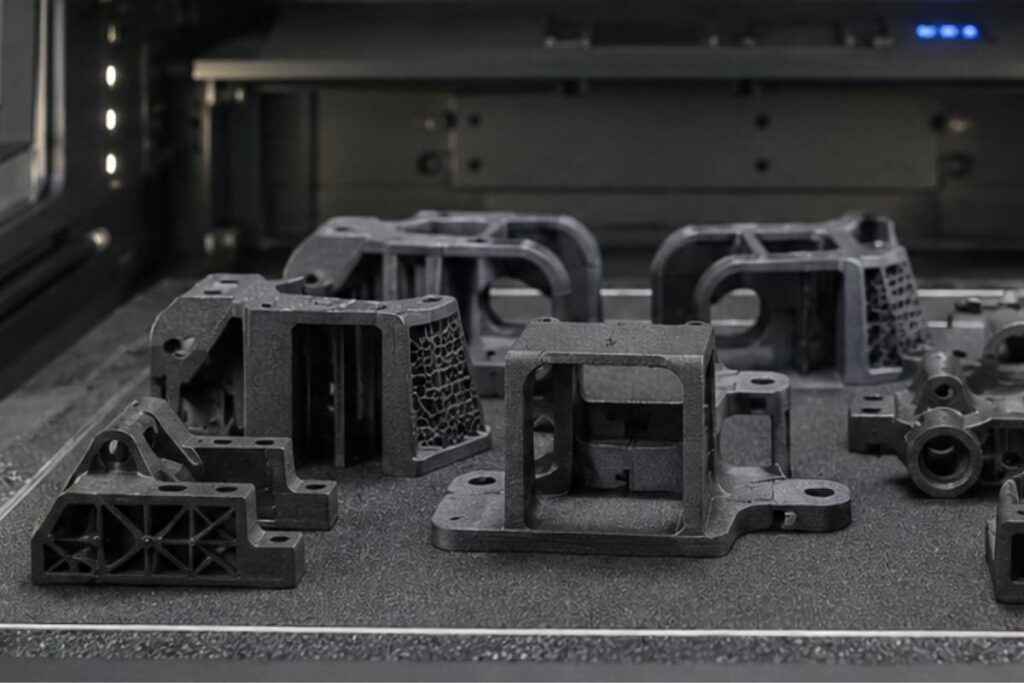
It is one of the most widely used technologies in industrial automotive currently.
Why?
Because it allows parts to be manufactured:
- resistant
- precise
- functional
- and with very good repeatability.
It is used a lot for:
- functional validations
- assemblies
- Technical parts
- tooling
- and advanced prototypes.
Furthermore, it has a great advantage: the parts withstand real-world tests.
SLS
Widely used When complex geometries or lightweight technical parts are needed.
It allows components to be fabricated without supports and has very good mechanical properties.
It is customary in:
- ducts
- Technical parts
- casings
- and industrial validations.
SLA
When visual finish or detail is important, SLA is often a very good option.
It is often used for:
- visual validations
- Presentation models
- Cosmetic surgery
- and pieces with a lot of surface detail.
FDM
Although it's a simpler technology, it's still used a lot for Quick validations and initial tests.
Especially useful when:
- Speed is needed
- large pieces
- early rapid iterations
What benefits is the industry achieving
Companies that integrate 3D printing into validation typically see quite rapid improvements.
Above all in:
- development times
- Iterations
- flexibility
- and error reduction
It also greatly reduces the dependence on external suppliers for specific project phases.
And something very important: it allows for validation before investing in moulds or definitive production.
This reduces risks and avoids many unnecessary costs.
3D printing does not replace production in automotive, it accelerates development
This is one of the most common mistakes.
3D printing doesn't have to replace traditional manufacturing. It accelerates critical phases of development.
Help with:
- quick validation
- try solutions
- optimise designs
- and reduce times before production.
In fact, many companies already use it as an essential intermediate stage before manufacturing moulds or launching definitive production.
And increasingly, manufacturers are turning to 3D printing solutions for automotive parts to integrate these types of quick validations into your engineering processes.
It is also being used a lot in tooling and production lines.
Beyond prototypes, many companies are using 3D printing to manufacture Tools, custom supports, templates, fixings, and line-adapted tools.
This allows internal needs to be met much faster than by resorting to traditional manufacturing.
And it also allows for quick modifications when processes or references change.
In environments where everything is constantly changing, eThat flexibility has great value.
How to start integrating 3D printing into validation
Many companies believe they need to invest in machinery or create an internal department to leverage these technologies.
And it's really not necessary.
Most start by outsourcing prototypes, functional parts, validations or small, specific projects.
This allows them to validate real-world applications before making larger investments.
In addition, Working with a specialised partner helps a lot in choosing:
- technology
- material
- tolerances
- most suitable approach according to the project
Because not all parts need the same process.
The future of automotive development will be much more agile.
The pressure to reduce timings will continue to grow.
Companies need to develop faster, validate sooner and continuously adapt to new production and innovation needs.
And there, industrial 3D printing is already becoming a key tool within the sector.
Not only because it speeds up manufacturing, but also because allows us to work in a much more flexible, iterative, and efficient way.
And in the automotive industry, that ability to react quickly is making more and more of a difference.
Are you looking to reduce validation times in automotive?
At Additium3D works with companies in the automotive sector which need to validate parts faster, optimise processes and accelerate developments without relying on endless deadlines or rigid processes.


We know that often the problem isn't manufacturing the part, but being able to test it quickly, iterate, and keep moving forward without blocking the project for weeks.
That's why we help engineering and development teams manufacture functional prototypes, tooling, and ready-to-use technical parts to validate very quickly.
If you are developing a new component, Do you need to validate geometries or do you want to reduce times within your development process, you can take a look at our 3D printing solution in automotive and tell us what you need.
And if you have any doubts about whether a part can be manufactured, validated or improved with 3D printing, write to us without obligation. We'll be delighted to help you find the best solution for your project.