




FDM materials
TPU
The flexible material for parts that require elasticity and strength
TPU is a flexible and durable thermoplastic polyurethane, ideal for parts that require elasticity, shock absorption and deformation capacity. At Additium3D we use it via FDM to manufacture components functional parts, guards and seals.


Flexibility, shock absorption and rubber-like behaviour for functional applications
What is TPU?
The TPU (thermoplastic polyurethane) it is a technical material that combines the properties of thermoplastics with a flexible and elastic behaviour.
Unlike rigid materials such as ABS, TPU makes it possible to manufacture parts capable of deforming and recovering their shape, so it is particularly interesting when the part needs absorb impacts, conform to a surface or work with a certain amount of flexibility.
Using FDM technology, TPU allows the manufacture of custom and functional parts without the need for moulds, tailoring the geometry and degree of flexibility to the requirements of each project.
LET'S TALK
Main properties of TPU
High flexibility
It allows the manufacture of parts that can deform under pressure or load without behaving like a rigid plastic.
Elasticity
Its elastic behaviour allows certain components to recover their shape after deformation.
Shock absorption
It is a good option for parts that need to cushion shocks, vibrations or impacts.
Wear resistance
Its flexible and resilient behaviour makes it suitable for components subjected to contact and repetitive use.
Rubber-like behaviour
It allows the manufacturing of components with characteristics similar to those of certain elastomeric materials, but through additive manufacturing.
Ideal for functional parts
It is particularly suitable for components where flexibility and adaptability are part of the part's operation.
TPU
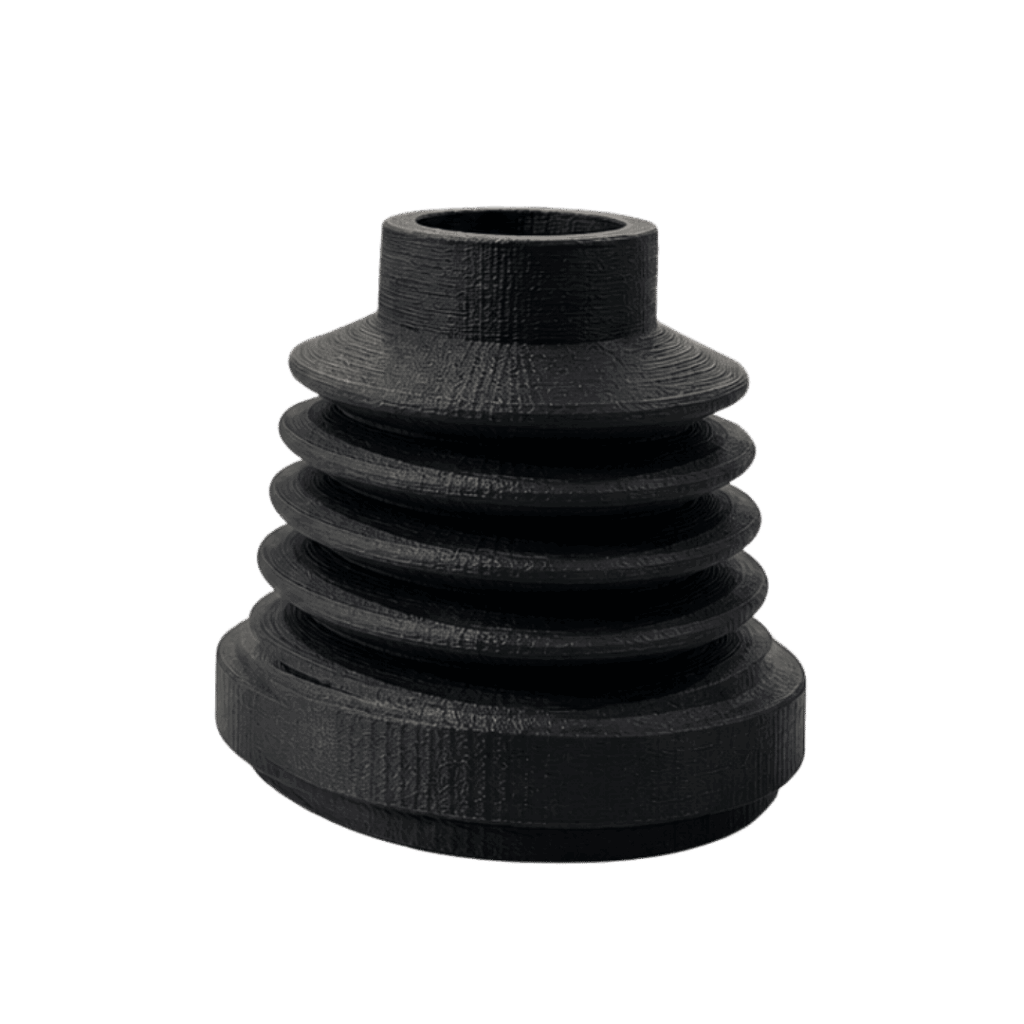
Technical information about TPU: characteristics and applications
What applications is TPU used for?
TPU is particularly interesting for manufacturing parts where flexibility, elasticity or shock absorption is required.
It is commonly used to manufacture:
- Gaskets and seals.
- Protections.
- Damping elements.
- Flexible parts.
- Components with rubbery behaviour.
- Machine guards.
- Roofs and cladding.
- Parts subjected to impact.
- Custom components.
- Functional prototypes.
Its ability to combine flexibility and strength makes it an interesting alternative when a rigid material cannot adapt to the needs of the application.
Why do we use TPU at Additium3D?
At Additium3D we use TPU when the project requires a flexible part that can absorb impacts or deform during operation.
Its main advantages are:
- High flexibility.
- Elastic behaviour.
- Good shock absorption.
- Wear resistance.
- Rubber-like behaviour.
- Suitable for functional parts.
- Custom manufacturing using FDM.
These characteristics make TPU especially useful for certain industrial applications and components that require a different behaviour from that of rigid plastics.
TPU and FDM technology
The combination of TPU and FDM 3D printing makes it possible to manufacture flexible parts directly from a digital model and without the need to produce moulds.
Among its main advantages are:
- Mould-free manufacturing.
- Freedom of design.
- Production of bespoke parts.
- Made-to-order.
- Functional prototyping.
- Ability to adapt the geometry to each application.
FDM technology stands out precisely for offering a wide variety of materials with very different properties, including flexible materials such as TPU.
When to choose TPU?
The TPU is the best option when looking for:
- Flexibility.
- Elasticity.
- Shock absorption.
- Parts with rubbery behaviour.
- Components that need to deform.
- Protections.
- Together.
- Flexible functional parts.
- Custom components.
If the part mainly requires rigidity, structural strength, or to support high loads, it may be more advisable to use other FDM materials such as ABS, ABS GF, or PAHT CF.
Request a free technical consultation
Do you need to manufacture TPU parts?
At At Additium3D we analyse every project to determine if the TPU is the most suitable material depending on the mechanical and functional requirements of the part.
Our technical team will advise you on selecting the material and 3D printing technology that best suit your application.
Talk with Addit-IA
Get quick answers on industrial additive manufacturing thanks to our artificial intelligence trained with Additium 3D expertise.
Schedule your free consultation
Book a call with me and tell me about your project: I'll help you select the most suitable technology and materials for your project.