5 real-life applications of 3D printing in the aerospace and military sector

5 real-life applications of 3D printing in the aerospace and military sector

3D printing is no longer a futuristic promise, but a strategic tool in the military. In recent years, 3D printing has profoundly transformed the aerospace industry, and its impact on the military is increasingly evident. Beyond prototyping or the manufacture of light parts, the armed forces of countries such as the United States, the United Kingdom, Germany and Israel are incorporating this technology in their strategic operations. Why? Because it makes it possible to manufacture essential parts in record time, reduce logistical dependence and adapt quickly to extreme conditions. At Additium 3D we work with aerospace 3D printing solutions focused on efficiency, resilience and adaptation to demanding environments. But what exactly is happening internationally? Military 3D printing applications in the armed forces of different countries United States: 3D printing on the battlefield The US military has developed mobile laboratories equipped with 3D printers that are deployed alongside troops. This allows them to manufacture spare parts and components instantly, without waiting for them to arrive from distant bases. In addition, the Pentagon has approved the use of 3D printed parts for the maintenance of such complex systems as Black Hawk helicopters and Abrams tanks. This decision not only reduces costs, but also minimises operational downtime. In 2019, the Marine Corps printed a 46 m² barracks in just 40 hours, a clear example of how 3D printing is also revolutionising military construction in remote areas. And it's not just about operability: the Department of Veterans Affairs (VA) is already producing customised 3D prosthetics, offering veterans solutions tailored to their real needs. UK: drones and logistics in 24 hours The British Army has developed military drones 3D printed and assembled in less than 24 hours, used in reconnaissance missions. This speed provides a significant tactical advantage in critical operations. During military exercises, they have also tested printing parts in situ to replace failed components, a strategy that reduces logistical vulnerability and improves autonomy in the field. Germany: decentralised production with metal The Bundeswehr has opted for decentralised production, allowing parts to be printed directly at deployed bases. Thanks to collaboration with companies such as EOS, high-strength metal components are being developed for defence systems and armaments. Israel: agility and innovation at military bases The Israel Defence Forces (IDF) have 3D printers on their own bases, enabling them to produce tools, adapters and mechanical parts immediately. Even in emergency medical situations, they have produced critical components for medical equipment. France: Rapid prototyping and logistical support The French navy uses 3D printing to design new weapons and maintenance tools in less time. In operations in Africa, printers have been used to reduce dependence on shipments from Europe, improving logistical autonomy. NATO and other countries: Integration and global expansion NATO has initiated projects to integrate 3D printing into the joint logistics chain, especially in multinational or humanitarian missions. Countries such as Australia, India, China and Russia are also investing in military 3D printing, focusing on operational autonomy, advanced technology and cost reduction. In April 2025, the Centre for the Development of Special Applications and Certification of Processes for the Military and Defence Sectors (CEDAEC) was inaugurated in Linares (Jaén), the first in Spain dedicated to advanced manufacturing for the Armed Forces. This centre, the result of an agreement between the company Sicnova and the Ministry of Defence, has cutting-edge technology in 3D scanning, additive manufacturing and test laboratories, and will serve as a coordinating centre for facilities in Albacete, Rota and Cordoba. In addition, Spanish company Meltio has successfully expanded into the international defence market, with the validation of its metal 3D printing technology by the South Korean Army, marking its first foray into Asia. This certification follows previous validations by the US Navy, the French Navy and the Spanish Army and Air and Space Forces, as well as other European militaries. In this context, why is 3D printing key in the aerospace and military sector? Because it enables agile, adaptable and decentralised manufacturing, qualities that fit perfectly with the needs of the aerospace industry. From lightweight metal parts to complete structures, 3D printing opens the door to a new paradigm in defence and aviation. If you are looking to apply these innovations to your processes or projects, find out how we work in aerospace 3D printing and how we can help you make a technological leap with solutions designed for the most demanding conditions.

What you need to know before 3D printing: print many parts at once or one at a time?

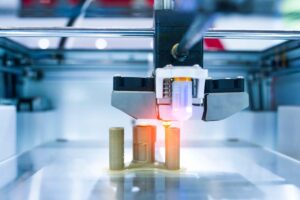
FDM (Fused Deposition Modelling)

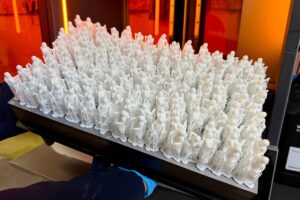
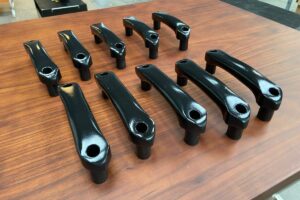
At Additium 3D, we offer advanced 3D printing solutions for short and medium runs that meet the industry's most demanding quality standards. Unlike traditional solutions, our 3D printing technology enables the production of prototypes, functional parts and customised components with high quality finishes, ideal for industrial processes. Differences between short-run, medium-run and mass production When it comes to 3D printing, it's important to understand the differences between short-run, medium-run and mass production, as each is suited to different manufacturing needs. Here's how they differ and what their advantages are: Short runs Short runs in the context of 3D printing refers to relatively small quantity production of parts, which is usually below what is considered mass production. Typically, this type of production is used to produce between a few units and several tens of parts, depending on demand and the specific project. Short runs are ideal for situations where fast and economical production is needed without resorting to the high costs and time associated with mass production. They are widely used for prototypes, limited runs, or when rapid customisation or design adjustments are required. Medium batches Medium batches in 3D printing involve the production of a larger number of parts than in short batches, but still smaller than in mass production. Generally, this type of production involves quantities ranging from tens to a few hundred units, depending on demand and the project. Medium batches are ideal for projects that require a reasonable quantity of parts in a relatively short time, but without compromising product quality. In addition, customisation possibilities remain an advantage, as there is no reliance on expensive tooling or time-consuming processes to produce parts with variations. Mass production Mass production with 3D printing refers to the production of large quantities of parts in a continuous, optimised and standardised manner. This type of production is ideal when a high volume of parts is required, such as in the manufacture of large-scale products or industrial components that need to be constantly available. The main advantage of mass production is its low cost per unit, which makes it the most cost-effective option when very high production volumes are required. However, it is important to note that as production volume increases, part customisation is reduced as efficiency and standardisation in the process is prioritised. Which one to choose? Short runs are perfect if you need flexibility, speed, customisation or if you are launching a small-scale product. Medium batches are ideal if you already have a validated product and need to produce a larger quantity without the high costs of mass production. Mass production is the option for large quantities, but with a high initial cost and less flexibility to change or adapt the product. At Additium 3D, we help you decide which type of production is most suitable for your business, always guaranteeing quality, efficiency and competitive cost at every stage of manufacturing. Advantages of 3D printing in short and medium batches 3D printing has established itself as a key alternative for modern manufacturing, especially when it comes to limited series production. Here's why our industrial 3D printing is the perfect solution for your needs: 1. Flexibility in design and customisation One of the biggest advantages of 3D printing is the ability to quickly customise and modify designs without the additional costs and time involved in traditional manufacturing. We can produce bespoke parts, tailored to your exact specifications, which improves the functionality and performance of each component. 2. Reduced costs and production times Traditional manufacturing can be costly and time consuming, especially in small batches. With industrial 3D printing, many of the intermediate processes are eliminated, resulting in reduced costs and production times. From design to delivery, manufacturing time is significantly shorter, allowing you to get products to market faster. 3. High precision and industrial finishes Our 3D printing service is at the cutting edge of technology and offers high quality finishes that meet the industry's most demanding needs. The parts produced are accurate to the millimetre, making them perfect for applications in sectors such as automotive, aeronautics and medicine, where reliability and quality are paramount. 4. Sustainability in manufacturing 3D printing makes it possible to optimise resources and minimise material waste, which translates into more sustainable processes. Moreover, by being able to produce only the quantities needed, excess stock and the costs associated with overproduction are avoided. Rapid prototyping and design validation Thanks to 3D printing, companies can prototype and validate designs in record time before moving to mass production. This is essential to avoid costly mistakes and ensure that every part works right the first time. Industrial applications of 3D printing in short and medium batches The advantages of 3D printing are not only limited to the manufacture of single parts, but are also ideal for small-scale production. Some of the most common applications include: Customised components for machinery: With 3D printing, complex parts can be manufactured to perfectly fit the needs of any machinery. Spare parts manufacturing: The ability to produce small, customised batches allows the manufacture of spare parts on demand, reducing lead times. Functional prototypes: Manufacturing functional prototypes with the same quality and materials as the final parts facilitates design validation and subsequent production. So, printing

The best 3D printing companies in Spain

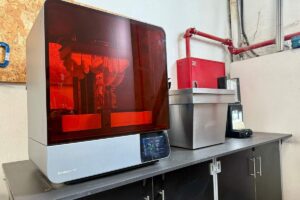
Additium3D SLA Technology

When it comes to 3D printing, there is a wide range of companies offering solutions for different sectors, from prototyping to the production of customised parts. However, it is important to understand that not all companies offer the same level of service. The key difference lies in how projects are approached and the ability to offer an end-to-end solution that covers the entire process, from design to delivery of the final product. In this article, I want to explain why Additium 3D's end-to-end service is the best option for companies in all sectors and individuals looking for a complete and customised solution for their 3D printing needs. 3D printing companies vs. comprehensive 3D printing solution The 3D printing service can be divided into two broad categories: on the one hand, we find companies that offer only the manufacture of parts from an existing design, and on the other hand, there are companies like Additium 3D that provide a comprehensive solution that covers all stages of the process, from design to manufacture and after-sales advice. The traditional 3D printing service focuses primarily on the manufacture of the parts, using 3D printing technology to create objects from digital files. This type of service is suitable for companies that already have a defined design and need a quick and cost-effective solution to produce a prototype or final parts. However, this business model has its limitations: if you do not have a design or if your project requires further customisation, you cannot count on this type of company to develop the whole process. Additium 3D's end-to-end solution, on the other hand, covers the entire project lifecycle. From the moment you have an idea to the final manufacture of the parts, including customised design, technical advice, selection of materials and process optimisation. In this way, we not only ensure that the parts are manufactured with precision and quality, but we also accompany you throughout the process to ensure that the end result meets your expectations and needs. In addition, our offer adapts to any type of project, whether it is for a private individual requiring a single part or a company requiring more complex, higher volume production. Our customised approach ensures that each customer receives exactly what they need, optimising both time and resources. Additium 3D: The complete 3D printing solution for businesses in Spain Selecting the right 3D printing provider can make all the difference to the success of your projects. Unlike other companies that simply sell printers or only offer a printing service, Additium 3D offers a comprehensive service that covers all stages of the process: With Additium 3D, you don't have to coordinate multiple suppliers or buy expensive equipment: the entire process is centralised, saving time, reducing costs and ensuring consistent results. The Additium 3D end-to-end solution: What it includes and why it's the best choice At Additium 3D, we believe in the importance of offering an end-to-end solution that covers all of our customers' needs. We focus on offering a complete service from part design to final manufacturing. Here's what Additium 3D's comprehensive service includes in concrete terms: Custom design If you don't have a previous design, our team of engineers and designers will create the right model for you. Whether you need a working prototype, a customised part or a spare part, we'll help you design it from scratch. Expert technical advice At all times, you'll have the support of our experts to guide you in selecting the right materials and the best printing technology for your project. Our team will be on hand to ensure that the process is as efficient as possible. Fast, quality manufacturing 3D printing enables rapid manufacturing of prototypes and final parts. We ensure that each part is manufactured with the utmost precision, using the best techniques and materials available on the market. In addition, if your project requires a larger production run, we can scale up manufacturing without compromising quality. Variety of materials We have a wide range of materials available, from standard plastics to resins and metals, allowing us to offer solutions tailored to different needs. Whether you need a strong, flexible or high-precision part, we have the right material for you. Scalability If at any point your project needs to move from prototyping to mass production, we can adapt to your needs. 3D printing is not only ideal for small runs, but is also perfect for producing larger series efficiently. Optimised final delivery We ensure that every part is delivered on time and to the expected quality. In addition, our after-sales service offers you the support you need to resolve any questions or problems that may arise once you receive the parts. What sets us apart is that we don't just print parts; we accompany you throughout the entire process, ensuring that every stage of the project is carried out in the most efficient and cost-effective manner. No matter what industry you operate in, at Additium 3D we offer solutions that are tailored to your specific needs. When to go with an all-in-one 3D printing company like Additium 3D? Choosing an all-in-one 3D printing company like Additium 3D is the best option when you need a complete solution that covers all the phases of the project, and even when you need just one specific one. Here are some situations in which our offer is the most suitable: When you don't have a design and you need a customised part If your project doesn't have a design

Buying a 3D printer vs. outsourcing 3D printing: Which option is better for your company?

Buying a 3D printer vs. outsourcing 3D printing: Which option is better for your company?

Additive manufacturing has revolutionised the business world, enabling rapid prototyping, customised parts and bespoke production. But many companies face a big question: should they buy a 3D printer or outsource the service? In this article we look at the advantages and disadvantages of each option, with a particular focus on price and long-term profitability. Comparison: Buying a 3D printer vs. outsourcing 3D printing When it comes to integrating 3D printing into a company, it is essential to evaluate whether it is better to buy your own printer or rely on a specialised service. The decision will depend on factors such as the frequency of use, the budget available, the need for qualified personnel and the level of quality required. In this comparison, we look at the main differences between the two options to help you make the best decision for your business needs. Factors Buy a 3D printer Outsource to a supplier Initial investment High (equipment, software, training) Low (pay-as-you-go) Maintenance Company responsibility Supplier takes over Quality and accuracy Depends on the equipment purchased Access to advanced technology Versatility of materials Limited to the printer purchased Option of multiple technologies and materials Production time Fast if you have the right equipment Can be faster with optimised production Skilled staff Needed to operate and maintain it Not necessary, advice included Initial investment Buying a 3D printer involves a significant initial investment. It is not only the cost of the equipment, but also the software and training needed to operate it correctly. Outsourcing 3D printing, on the other hand, allows you to pay only for the service when you need it, reducing the financial impact. Maintenance 3D printers require ongoing maintenance, from calibrations to replacement of worn parts. If the company purchases one, it must assume these costs and responsibilities. By outsourcing, the supplier takes care of maintenance and ensures optimal prints without the customer having to worry about it. Quality and accuracy The quality of printing will depend on the type of printer purchased. More affordable printers may not offer the accuracy required for certain professional applications. By outsourcing, you have access to high-end equipment without the need for a large upfront investment, ensuring a better finish and accuracy in your parts. Material versatility Each 3D printer has limitations in terms of the materials it can use. If a company buys a specific model, it will be restricted to the materials compatible with that machine. By outsourcing, it is possible to choose from multiple technologies and materials depending on the needs of the project. Production time If a printer is available in-house, production can be immediate, provided adequate staff and resources are available. However, if print demand is high, in-house production capacity may fall short. A specialised supplier can optimise production and deliver results in tighter timeframes. Qualified personnel Operating a 3D printer is not just a matter of pushing a button. It requires trained personnel who know how to operate the equipment, set parameters and solve technical problems. By outsourcing the printing, this factor is no longer a concern, as the supplier's experts take care of the entire process. When is it better to buy a 3D printer and when to outsource 3D printing? 3D printing has revolutionised production in sectors such as manufacturing, jewellery and medicine. However, many companies are faced with a key decision: should they buy a 3D printer or outsource printing? In this article, we look at the advantages of each option to help you make the best decision for your business needs. When is it best to buy a 3D printer Buying a 3D printer can be a great investment, but only if certain conditions are met that justify the expense and ensure its profitability: 1. Daily use and return on investment If your business requires 3D printing on a constant basis, buying a 3D printer can be a cost-effective solution. By producing in high volumes, you will quickly amortise the initial investment and reduce unit production costs in the long run. 2. Skilled personnel Having trained personnel to operate and maintain the printer is critical. 3D technology requires technical expertise, from file preparation to post-processing of parts. If your team is already experienced or you can train your staff, purchasing may be a viable option. If your business deals with a specific type of printing, such as resin printing for jewellery or the dental sector, purchasing a specialised printer will allow you to have full control over the process and the results. When it is best to outsource 3D printing For many businesses, outsourcing 3D printing is the most efficient and cost-effective solution. If you only need 3D printing sporadically or for specific projects, outsourcing will avoid unnecessary investment in machinery and maintenance. 2. Access to multiple technologies Companies specialising in 3D printing have different technologies and materials. Outsourcing gives you access to advanced options without being limited to a single machine or technology. By not having to invest in equipment, training and maintenance, your company will be able to save on fixed costs and focus on its core business. In addition, 3D printing companies often offer optimised production times. Professional quality with no learning curve If you are looking for high quality results without the risks associated with learning and calibrating the printer, outsourcing guarantees you professionally finished parts right from the start. Optimise your production with a full 3D printing service The decision between buying a 3D printer or outsourcing depends on your frequency of use, budget and the specific needs of your business. If you print on a regular basis and you can afford the investment, buying a printer may be the best option for you.

5 3D printing trends in the automotive industry

Trends in the Automotive Industry 1

The automotive industry is constantly evolving, with technological advances transforming design and manufacturing processes. In this context, 3D printing has become an essential tool for rapid prototyping, allowing manufacturers to optimise times, reduce costs and improve innovation in vehicle development. In this article, we will look at the main trends in rapid prototyping within the automotive sector and how additive manufacturing technology is revolutionising component design and production. Rapid Prototyping in the Automotive Industry Rapid prototyping is a key methodology in the automotive industry that enables the agile creation of functional models to evaluate and optimise the design of vehicles and their components. Using advanced technologies such as 3D printing, manufacturers can transform ideas into physical prototypes in a matter of hours or days, drastically reducing development times. Advantages of Rapid Prototyping in the Automotive Industry Acceleration of the development cycle Enables faster iterations, significantly reducing the time needed to move from design to production. Design Flexibility Modifications can be made on the fly without the need for expensive tooling or lengthy manufacturing processes. Cost reduction By eliminating the need for traditional moulds and tooling, resources are optimised and material waste is minimised. Efficient testing and validation Engineers can perform aerodynamic, strength and ergonomic tests before committing to mass production. Real-world examples of its applications Rapid prototyping is widely used in the automotive industry to develop everything from mechanical parts to vehicle interiors. Some examples include: Concept models: Brands such as BMW and Audi use 3D printing to evaluate aerodynamic designs before manufacturing test vehicles. Functional components: Companies such as Ford use 3D printed prototypes to validate cabin ergonomics and the efficiency of ventilation systems. Tooling and tooling: Volkswagen has reduced costs and manufacturing times by creating customised 3D printed tooling for its assembly lines. Thanks to these applications, rapid prototyping has become an indispensable tool for innovation and production optimisation in the automotive sector. In addition to its role in prototype development, 3D printing has also revolutionised the manufacture of functional automotive parts. In our article on 3D printable car parts, you can see which are the most common items manufactured using 3D printing and how this solution is transforming the automotive industry. Trends in the use of 3D Printing in Automotive Adoption of Fused Deposition Modelling (FDM) According to Mordor's 2023 and 2024 Statistics Intelligence™, one of the most widely used methods in automotive 3D printing is Fused Deposition Modelling (FDM). Its ability to produce prototypes, concept model parts and final products with thermoplastic materials has made it one of the most popular techniques in the industry. In addition, the use of advanced thermoplastics, such as carbon fibre and reinforced polymers, allows for lighter and stronger components, reducing costs and improving environmental impact. Customisation and production of bespoke parts Automotive manufacturers are using 3D printing to create customised parts tailored to the specific needs of each vehicle or customer. This is particularly relevant in limited edition production and the aftermarket. Advanced materials for increased performance The development of innovative materials, such as high-performance resins, technical polymers and lightweight metals, has enabled the manufacture of stronger and more functional parts. These materials improve the safety and efficiency of automotive components. Reducing vehicle weight Thanks to additive manufacturing, it is possible to design lighter structures without compromising strength. This is key for the industry, as lower vehicle weight contributes to improved fuel consumption and reduced CO2 emissions. Production of tools and moulds with 3D Printing In addition to final parts and prototypes, additive manufacturing is used to develop tools, tooling and moulds, optimising assembly processes and reducing lead times on the production line. The importance of functional prototyping in automotive product development Functional prototyping plays a key role in automotive product development, as it enables real-world performance testing prior to mass production. With 3D printing, engineers can simulate usage conditions, verify component compatibility and improve vehicle safety and efficiency. Ultimately, functional prototypes help: Phases of automotive product development that require prototypes The development of a new vehicle is a complex process that goes through several phases where prototyping plays a key role. From initial idea to final production, manufacturers rely on physical models to validate concepts and improve design efficiency. Here are the key phases where prototypes are essential: Conceptualisation In this initial stage, designers create sketches and 3D digital models to define the aesthetics and functionality of the vehicle. 3D printing allows the creation of scale models, helping to visualise shapes and proportions before moving on to the next phase. Design and Development Once the concept is defined, initial prototypes are produced to test structures, assemblies and materials. Here, rapid prototyping allows for agile iterations, fine-tuning components without the need for traditional manufacturing tools. Testing and Validation Functional prototypes undergo rigorous testing to evaluate aerodynamics, ergonomics, structural strength and safety. For example, specific parts can be 3D printed for impact and wear testing, ensuring their viability prior to mass production. Pre-production Before a vehicle is launched on the market, final versions are created and undergo road testing and final adjustments. At this stage, rapid prototyping remains key for last-minute modifications.

3D printed organs and applications in medicine

3D printed organs and applications in medicine

3D printing is revolutionising many sectors, but few fields have as much potential to transform lives as medicine. 3D printed organs represent not only a technological breakthrough, but also hope for millions of people waiting for a transplant. In this article, we have detailed what 3D organ printing is, its advantages and disadvantages, its impact on the future and real-life examples of organs that have already been 3D printed. What is 3D organ printing 3D organ printing is a biotechnological process that uses 3D bioprinters to create functional tissues and organs from bio-inks composed of living cells. This approach combines tissue engineering with advanced printing technologies, allowing biological structures to be built layer by layer. The process begins with a digital model of the organ designed from CT or MRI scans of the patient. A bioprinter then deposits cells and other biomaterials to form the desired tissue. Although still in experimental stages, this development has already generated significant milestones, such as the first 3D printed organ, a miniature heart with blood vessels. Who invented 3D organ printing? Bioprinting is a collaboration between scientists and technology companies. Organovo and other pioneers have led this research. How is 3D design used in medicine? 3D design makes it possible to create accurate models of organs and tissues from medical images. These models are used both for printing and for planning complex surgeries. How will 3D printing change the world of medicine? 3D printing could revolutionise transplantation, reduce waiting times, personalise treatments and facilitate pharmaceutical research. Have there been any successful 3D printed organ transplants? Although no transplants have yet been performed in humans with fully 3D printed organs, advances in tissues such as skin are already being used clinically. Advantages of 3D printed organs Currently, thousands of people die each year waiting for a compatible organ. With 3D printing, a customised organ could be manufactured, eliminating this problem. By using the patient's own cells to create the organ, the risk of immune rejection, a common complication in conventional transplants, is minimised. The possibility of designing organs specifically for each individual opens the door to medical care that is completely tailored to the needs of each patient. 3D printed organs are also being used to test drugs and treatments, which could speed up the development of new therapies and reduce the need for animal testing. Disadvantages of 3D organ printing While 3D organ printing has immense potential, it also faces several challenges: Some of the application areas of 3D in medicine 3D printed organs are not only limited to transplantation. Here are some of its current and future applications: Examples of organs that can be 3D printed 3D printing has opened up a range of possibilities in the field of regenerative medicine. Here are some of the organs that have already been 3D printed or are in the process of experimental development: Prototypes of miniature functional hearts, complete with chambers and blood vessels, have been created. These advances make it possible to study heart disease and test drugs more safely. 3D printed kidneys have been designed as models for research. Although they are not ready for transplantation, they represent a step towards making functional organs. 3D printing of livers is mainly used to study liver diseases and test new drug treatments. 3D printed lungs are in early stages, with a focus on replicating their complex network of blood vessels and alveoli. Skin printing is one of the most advanced applications and is already being used in treatments for severe burns and cosmetic product trials. 3D printed cartilage is used to repair damaged joints, such as knees and hips, with great success. Bioprinting blood vessels is essential to ensure that printed organs receive nutrients and oxygen efficiently. Customised hearing implants have been created using 3D printing, helping patients with deformities or hearing loss. What organs have been 3D printed? Although most 3D printed organs are in experimental stages, important milestones in the development of 3D printed organs have already been reached: These advances bring us ever closer to the possibility of transplantation with 3D printed organs, marking a sea change in modern medicine. 3D printed organs: A glimpse into the future Printing human organs could revolutionise medicine in the coming decades. From eliminating waiting lists to developing fully personalised treatments, the possibilities are endless. However, it is crucial to continue to invest in research and overcome current challenges to make this technology a reality accessible to all. At Additium 3D, we are committed to innovation in 3D printing technology. As a medical 3D printing company, we lead projects that transform the healthcare sector. Find out more about how our medical 3D printing experts are helping to integrate these solutions into the medical field.

10 3D printable car parts

10 3D printable car parts

The automotive industry is undergoing a true revolution thanks to 3D printing. From the design and manufacture of customised parts to the production of spare parts, this technology is transforming the way vehicles are developed and maintained. In this article, we'll look at the benefits and applications of 3D printed car parts, how printing experts are leading this evolution and real-life examples of parts that can be 3D scanned and printed. Benefits of 3D printing for automotive 3D car parts for customised printing 3D printing has revolutionised the automotive industry, enabling the creation of customised and efficient parts quickly and at low cost. In this article we explore the main car parts that can be manufactured using 3D printing technology. 1. Body panels Body panels can be manufactured in 3D using lightweight and strong materials such as carbon filament or reinforced plastics. These panels offer the ability to customise vehicle design and reduce weight to improve fuel efficiency. 2. Bumpers 3D printing allows the production of customised bumpers, especially useful for customised vehicles or restorations. Thanks to this technology, prototypes and final parts can be produced with high precision. 3. Interior components Customisation of a car's interior has never been so accessible. 3D printing can create these elements in different colours, textures and finishes to suit the user's style. 4. Air ducts Air ducts are essential parts of the air conditioning system. With 3D printing, they can be specifically designed to improve airflow and system efficiency. Engine parts Although 3D printing of engine parts is still under development, it is already possible to manufacture components such as: Thanks to advanced materials, these parts can withstand high temperatures and pressures. Personalised key rings and accessories 3D printing is not only useful for functional parts, but also for accessories such as key rings, mobile phone holders and cable organisers, which allow for a more personalised experience. 7. Prototypes for testing Before producing final parts, many manufacturers use 3D printing to create functional prototypes. These allow for fit, aerodynamic and performance testing without the high costs of traditional manufacturing. Custom wheels Wheels Wheels are one of the most prominent elements of a car's design. With 3D printing, unique and lightweight designs can be produced, optimising both the aesthetics and performance of the vehicle. Mirrors and mirror housings Mirrors and mirror housings are ideal components for 3D printing, especially for quick replacements or cosmetic customisation. 10. Brackets and clips Small parts such as brackets and clips are essential for assembling internal and external car components. 3D printing makes it possible to produce these elements with high precision and in a short time. Other practical applications of 3D printing in the automotive industry Spare parts and customisation The manufacture of 3D printed spare parts is one of the most in-demand applications. From 3D printed mechanical parts to 3D printed automotive spare parts, 3D printing facilitates the availability of components for classic or limited edition vehicles. It also allows car enthusiasts to customise cars in 3D, creating unique details for interiors and exteriors. Prototypes and advanced designs 3D car designers use 3D printers to create functional prototypes of parts and mock-ups. This accelerates the development of new models and improves collaboration between design and engineering teams. 3D scanning and part cloning The use of 3D scanners in the automotive industry allows existing components to be digitised for reproduction or enhancement. Knowing how to clone car parts with a 3D printer is key to creating exact, functional copies of hard-to-find parts. In addition to parts, 3D printing is combined with innovative technologies for cutting car interiors. Efficient cutting systems for automotive interiors allow optimising processes and creating customised finishes. Customised automotive interior cutting solutions ensure that each part fits perfectly, enhancing the aesthetics and functionality of the vehicle. The future of 3D Printing in the automotive industry With constant advances in materials and technology, the potential for 3D printing in the automotive industry is limitless. From complete 3D printed cars to die-cast parts in the automotive industry, the possibilities are immense. At Additium 3D, we specialise in offering All-In-One solutions for the manufacture of automotive parts. Our approach combines innovation, precision and quality to help companies stay at the cutting edge of technology. If you're looking for 3D printing experts for auto parts or want to start your 3D printing projects for cars, we're here to help.

Where to 3D print? Comparison of printing services and technologies

Where to 3D print? Comparison of services and technologies

3D printing technology is revolutionising a wide range of industries, from medicine to fashion, and more and more people are asking where to 3D print their own designs or projects. Whether you want to create prototypes, customised figures, spare parts or any object in three dimensions, today there are several options that allow you to access this service easily. In this article, we explore the different services available and the most commonly used technologies, so that you know where to 3D print your projects quickly, conveniently and affordably without leaving home. And if you're looking for the ultimate in ease, with Additium 3D's online 3D printing service, you can get your printed parts without hassle. 3D Printing Options: Which method is best for you? Before we delve into the sites where you can look for things to 3D print or print your own designs, it's important to know the technologies and services available. Here are the most common options: 1. Print from home: The option for the more crafty If you like to experiment with technology and have the time to learn, you can opt to buy your own 3D printer. Having your own equipment gives you total flexibility to print whenever you want, but it's not as simple as it sounds. In addition to the printer, you will need other accessories such as filaments, special lacquer or magnetic strips to optimise your prints. Reading the manufacturers' descriptions, it may seem that using a 3D printer is simple, but the reality is that operating these devices requires knowledge. Aspects such as extruder temperature, print speed, and filament quality directly affect the final result. How much does a 3D printer cost? The price of a 3D printer varies considerably depending on the brand, model and technology used. The most basic 3D printers, which typically use FDM (Fused Deposition Modelling) technology, can cost around €200, while more advanced printers, such as those using SLA or SLS, can cost over €1,000. You also need to take into account the additional costs of materials such as filaments and accessories needed to optimise the prints. Is it cost-effective to print at home? This option is only recommended if you plan to print a large volume of parts and have the time to learn the basics. Advantages: Disadvantages: 2. 3D printing shops: The classic option Another option is to go to a 3D printing shop. These spaces allow you to explain your needs, get a personalised quote and pick up your finished parts. In general, this option is recommended for those who prefer face-to-face contact and personal advice. However, this service tends to be more expensive than online alternatives, as physical shops have higher operating costs. Furthermore, in most cases, they do not offer any significant advantages over online 3D printing. Advantages: Disadvantages: Where to 3D print in Madrid? If you are wondering where to 3D print in Madrid or Barcelona, one option may be to go to specialised physical shops or local 3D printing centres. These shops often offer access to different types of printers and materials. This is an excellent option for those who need personalised advice or urgent prints, but keep in mind that online printing is usually more convenient and cheaper in most cases. Online 3D printing Spain If you are looking for an online 3D printing service in Spain, Additium 3D offers you a fast, affordable service with high quality materials for all types of projects, from functional parts to design prototypes. We work all over Spain, so you can place your order from any city, and we will send the printed parts directly to your home. We also print to scanned people! Online 3D printing services If you prefer convenience, speed and often more competitive prices, opting for an online 3D printing service is the best option. Platforms like Additium 3D allow you to upload your 3D file from the comfort of your home and receive your product within a few days. These types of services are ideal if you want cheap online 3D printing and are looking to save time, as you can manage the whole process without leaving your home. Also, if you don't have a design ready, you can search for things to 3D print on sites like Thingiverse or MyMiniFactory, where you will find a huge variety of free files that you can use. Also in Additium we do the design of your idea, you just have to tell us your project and we do it all for you. Why choose an online service? At Additium 3D, we also offer personalised advice. Even if you don't have a digital file, we can help you develop a design from scratch, making sure you get exactly what you need. Advantages: Disadvantages: 3D Printing Technology Comparison When deciding where to make 3D shapes or any type of object, it is important to know what technologies are available: FDM (Fused Deposition Modelling) This is the most common and widely used technology for plastic printing. It is affordable and works well for prototypes or functional parts. If you are looking for cheap online 3D printing, FDM is probably the technology you will use. SLA (Stereolithography) Ideal for parts with great detail and smooth finishes. It uses laser-cured liquid resins. It is perfect for decorative figures or projects that require high precision. SLS (Selective Laser Sintering) Uses a laser to sinter plastic or metal powder, ideal for creating strong, functional parts. It's more expensive, but great for functional prototypes. Where to look for things to 3D print? If you don't have your own design, there are websites like Thingiverse, MyMiniFactory. These platforms offer thousands of free files that you can download and send to a service like Additium 3D for printing. Another option is to contact Additium 3D directly, tell them your idea and they will take care of the whole process from design to 3D printing. How much does it cost to 3D print online? The price is

Dental 3D Printing: 10 Uses of 3D Printing in a Dental Practice

How to create models from dental intraoral 3D scans

3D printing technology has transformed many industries, and dentistry is one of the biggest beneficiaries. Thanks to the precision and versatility of dental 3D printers, customised dental solutions can be manufactured quickly and efficiently. In this post, we tell you how 3D printing is revolutionising dentistry, from creating dentures to orthodontic devices, and how you can take advantage of a dental 3D printer in your dental practice. But, before we start delving into these topics, let's cover the basics by answering some questions such as what exactly is 3D printing in dentistry, how long does a dental impression last or how a dental impression is made. We believe they will help you better understand how this innovative technology is changing the practice of dentistry. 3D printing for dentists 3D printing in dentistry is an advanced technique that uses 3D printers to produce accurate, customised dental models from digital images. This technology makes it possible to create dentures, crowns, aligners and other dental devices quickly and efficiently. 3D printing technology has revolutionised many industries, and dentistry is no exception. Thanks to advances in intraoral scanning and digital fabrication, dental treatments are now faster, more accurate and more personalised than ever before. 3D printing in dentistry enables the creation of dental models, aligners, crowns and other devices with an exact fit, optimising treatment time and improving the patient experience. What is 3D printing in dentistry? 3D printing in dentistry is an advanced technological process that replaces traditional moulds with highly accurate digital models. It uses intraoral scanners to capture a three-dimensional image of the patient's mouth. This digitised image is converted into a CAD (computer-aided design) file, which is then used to fabricate customised dental devices using 3D printers. This process eliminates the hassles associated with conventional moulds, which can be uncomfortable and lead to fit errors. In addition, the digitisation of the procedure ensures greater efficiency in manufacturing and reduced material waste. What is a dental digital impression? A dental digital impression is the 3D representation of the patient's oral anatomy using digital scanning technology. This innovative method provides an extremely accurate model of the patient's mouth, allowing dentists to plan treatments more effectively. Unlike traditional methods, which require the use of silicones or alginates to take physical impressions, digital printing offers significant advantages: How is a 3D dental impression made? The dental 3D printing process follows a series of well-defined steps. In this article we explain the step-by-step process of creating 3D printed dental models from 3D scans. In short, the process would be: How long does a dental impression take? The time needed to make a dental impression depends on the method used. Digital impressions with an intraoral scanner usually take only a few minutes to complete, whereas the fabrication of a 3D printed model can take several hours or even days, depending on the complexity of the design and the material used. Thanks to the evolution of high-speed 3D printers, it is now possible to produce crowns, bridges and aligners in significantly shorter times, reducing the wait for patients and allowing dentists to optimise their workload. 10 uses of 3D printing in a dental practice Dental 3D printing offers a wide range of applications in dentistry that improve treatment accuracy and the patient experience. Here are 10 outstanding uses of this innovative technology in dental practices and how it is changing the way dental professionals work. 1. Customised dental models One of the most common uses of 3D printing in dentistry is the creation of accurate dental models. These models are used for treatment planning, showing the patient the procedures to be performed and for designing orthodontic appliances. With a dental 3D printer, practitioners can produce detailed models that accurately reflect the patient's oral anatomy. 2. Dentures and bridges 3D printing of dental prostheses is another key application. Thanks to this technology, it is possible to produce partial and complete dentures that fit perfectly in the patient's mouth, ensuring a comfortable and precise fit. In addition, dental 3D printers make it possible to significantly reduce production time and costs compared to traditional methods. 3. Crowns and veneers Dental 3D printers enable the production of high-precision dental crowns and veneers. These parts are digitally designed and then printed in biocompatible materials that are both aesthetic and durable. With dental 3D digital printing, dentists can offer quick and customised solutions to restore the aesthetics and functionality of their patients' teeth. 4. Surgical guides for implants In the field of implant dentistry, 3D printed surgical guides have greatly improved the accuracy and success of procedures. These guides, designed from digital scans, allow dentists to place implants with great accuracy, minimising errors and reducing surgery time. 5. Orthodontic appliances 3D printed orthodontic appliances are becoming increasingly popular due to their ability to provide a precise fit and superior comfort. Clear aligners, for example, are manufactured using 3D orthodontic printers that ensure an exact fit to the patient's tooth structure. 6. Customised dental implants With dental 3D printing, customised implants can be manufactured for each patient. This ensures better integration with the bone and a reduced risk of post-operative complications. Dental 3D printers make it possible to design implants that fit perfectly to the specific site where they are to be placed. 7. Mouth protection devices Mouth protection devices, such as bruxism splints or mouth guards, can be used to protect the mouth.

3D Printing with Polyamide: Complete guide to Polyamide 12, PTFE with fibre and more

Polyamide 3D Printing: Complete guide to Polyamide 12, PTFE with fibre and more 3D Additium

In the world of 3D printing, selecting the right material can make the difference between a successful project and one that fails to live up to expectations. Polyamide, also known as nylon, has established itself as a favourite choice in this area due to its exceptional physical and mechanical properties. In this comprehensive guide we will explore polyamide in 3D printing in depth, highlighting its various forms such as Polyamide 12 and PTFE with fibre, and breaking down how these variants can elevate the quality and functionality of your creations. Find out why polyamide is an indispensable choice for digital fabrication professionals. What is Polyamide? Polyamide, commonly known as nylon, is a synthetic polymer that is widely used in 3D printing. This material is renowned for its durability, strength and flexibility, making it a popular choice for various industrial and consumer applications. Polyamide's key properties Polyamide has a number of properties that make it ideal for 3D printing: What Polyamide is used for Polyamide is used in multiple industries due to its versatility. In 3D printing, it is used to manufacture functional parts, prototypes and end products that require durability and strength. It is common in the manufacture of gears, brackets and structural components. What are the main characteristics of polyamide? The main characteristics of polyamide in 3D printing include: Applications of Polyamide in 3D Printing Polyamide is used in various applications within 3D printing: The most common Applications in 3D Manufacturing In 3D manufacturing, polyamide is commonly used for: It is useful for complex and functional models, as it allows the creation of complex and functional models thanks to its flexibility in design, capable of producing complicated geometries, and durability, suitable for models that need to be manipulated or used. It also allows the greatest freedom of all 3D printing technologies, as, among all 3D printing technologies, polyamide offers design versatility, allowing for complex and detailed structures and adaptability. Ideal for a wide range of applications and sectors. In addition to the applications mentioned above, polyamide is also used in: Polyamide 3D Printing Colours and Finishes Polyamide 3D printing offers a wide range of colours and finishes, adapting to various aesthetic and functional needs. This versatility makes polyamide a popular choice for both prototypes and high quality end products. Smooth and glossy finishes: One of the major attractions of polyamide is the possibility of obtaining smooth and glossy finishes. These finishes not only improve the aesthetics of the product, but also increase its functionality by reducing friction and facilitating cleaning. A smooth and glossy finish is especially useful in applications where visual appearance is crucial, such as consumer products, decorative parts, and display components. The post-processing process may include polishing, sanding and steam treatment to achieve the desired finish. These methods remove visible coatings and minor imperfections, resulting in a smooth and attractive surface. Gloss finishes can also improve the material's resistance to dirt and wear, prolonging the life of the product. Colour diversity: Polyamide is available in a wide variety of colours, allowing designers and manufacturers to create customised parts that perfectly match the aesthetic needs of their customers. This colour diversity is particularly beneficial in visual prototyping, where appearance and presentation are as important as functionality. In addition, the ability to print in multiple colours can be a significant advantage in the production of parts that require colour coding or visual differentiation. For example, in the manufacture of components for the medical industry, different colours can help to easily identify and organise parts. The availability of a wide range of colours also facilitates the creation of end products that do not require additional painting, saving time and resources in the manufacturing process. Colours can be incorporated directly into the printing material, ensuring uniformity and consistency throughout the part. Special finishes and textured finishes: In addition to smooth and glossy finishes, 3D printing with polyamide allows the creation of special textures and finishes. These finishes can be designed to mimic natural or industrial surfaces, providing a unique appearance and enhanced functionality. Textures can be used to improve grip, reduce slippage, or simply to add a distinctive aesthetic element to the product. Adaptability and customisation: The ability to customise both the colour and finish of polyimide printed parts allows companies to tailor their products to the specific preferences and requirements of their customers. This adaptability is crucial in competitive markets where product differentiation can be key to success. In conclusion, polyamide in 3D printing offers impressive flexibility in terms of colours and finishes. From smooth and glossy finishes that enhance aesthetics and functionality, to a wide diversity of special colours and textures, this material allows manufacturers to create customised, high quality parts that meet the demands of a variety of applications and markets. Advantages and disadvantages of Polyamide in 3D Printing Polyamide is a versatile and robust material for 3D printing, with a unique combination of properties that make it suitable for demanding applications. Its high strength, thermal and chemical stability, and flexibility are great advantages, especially for the manufacture of functional parts and industrial components. However, its tendency to absorb moisture and its relatively high cost are factors to consider when choosing this material. Therefore, carefully assessing the specific needs of your project will help you determine if polyamide is the best choice for your 3D printing applications. Advantages Polyamide is known for its

LET'S TALK

Choose how to contact

Talk with Addit-IA

Get quick answers on industrial additive manufacturing thanks to our artificial intelligence trained with Additium 3D expertise.

Schedule your free consultation

Book a call with me and tell me about your project: I will guide you without obligation on how to optimise your production with 3D printing.